


 They will be on video but won't see you.
 Make sure to enable your mic if prompted.
 Language:


Watch Buyer's Guide

If you’re in the market for a new watch, then our watch buying guide has everything you need to help you make an informed decision. Puzzled by watch movements? Then read all about the mechanisms that drive your watch in our watch movements section.
Don’t know your chronograph from your chronometer? Then peruse our functions and features section. Unsure which luxury brand to plump for? Read all about the finest watch making in our luxury watch section.
Contemplating the cost or factoring in the finance? Head directly to our cost of your watch section which will guide you through the decision-making process. If you’re ready to shop, then let the continue the journey section guide your way.
Jump to Section
What is a watch movement?
You’re looking for a brand-new watch and yet the world of watch movements is like a foreign language to you, we are here to help. The three most prevalent movements are mechanical, automatic and quartz. With hundreds of watches to choose from here at Ernest Jones, establishing which movement you would like in your watch can be a great first step to narrowing your search down.
What is a mechanical watch movement?
Spring powered clocks, invented in the 15th century, inspired the creation of the first mechanical watches, which appeared in Europe in the 17th century. Creation of the mechanical movement is an expert craft, requiring patience and skill in order to perfect the required intricate series of tiny components working together. Mechanical watches contain a mainspring which needs to be wound regularly in order to power the function of the hands. Energy from the spring is transferred through a number of additional spiralling springs and moving gears, creating the regular, smooth motion of the second hand.
What is a quartz movement watch?
Until the 1970s, all watches utilised mechanical or automatic movement. In 1969, Japanese watchmakers, Seiko, invented the battery-powered quartz movement, launching it two years later. Often considered a standard, no-frills option, quartz movement uses a battery to send an electrical current through a tiny quartz crystal, which once electrified will vibrate 32,768 times per second, creating a signal with a precise frequency. A circuit within the watch measures and converts the signal into pulses – one per second. The watch hands move consistently with the pulses, and the vibrations keep the movement oscillating and continue to drive the motor.
What is an automatic movement watch?
Automatic, or self-winding, movement contains many of the workings of the mechanical movement, however it does not require manual winding of the mainspring. The main difference between mechanical and automatic movement is that the latter utilises a metal weight – or rotor – which rotates freely in conjunction with the earth’s gravitational pull and the movement of the wearer’s wrist in order to create kinetic energy which automatically compresses the mainspring. Like the mechanical movement, automatic movements do not require battery replacements.
What is an Eco-Drive movement watch?
The Eco-Drive movement by Citizen uses one of the simplest yet effective power generating systems in watch making. The Eco-Drive movement has the ability to utilise light from almost any source to power the watch. The Eco-Drive use amorphous silicon under the dial of the watch to convert light into energy. This energy is stored in a special kind of power cell. Because Eco-Drive can store energy harvested from light, it makes any watch with the movement extremely efficient and eco-friendly. Shop Citizen Eco-Drive now
Functions and features
Once you’ve established which movement you would like your watch to feature, now may be the time to explore the functions and features of watches to narrow your options down further. When discussing features, a great place to start is the world of chronographs and chronometers.

The allure of Swiss luxury
If you’re looking for a luxury timepiece, then look no further than a watch that comes with the prestigious, ‘Swiss made’ stamp of quality. If Swiss luxury is what you’re after, we have some incredible, iconic brands to choose from.
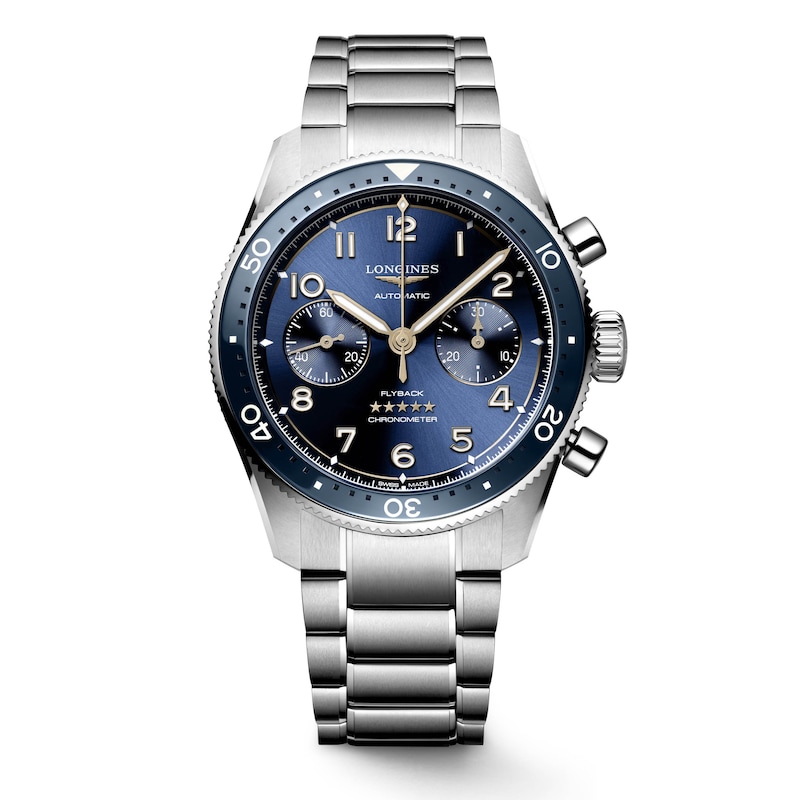
Longines
Longines, established in 1832 in the picturesque town of Saint-Imier, Switzerland, has long been revered as a pioneer in the art of Swiss watchmaking.
As an esteemed stockist of Longines, we proudly offer an exquisite selection of Longines timepieces. Whether you're drawn to the timeless elegance of the La Grande Classique collection or the refined sophistication of the Master Collection, we have the perfect watch for you.
Curious to learn more about Longines? Browse our collection of Longines watches today.
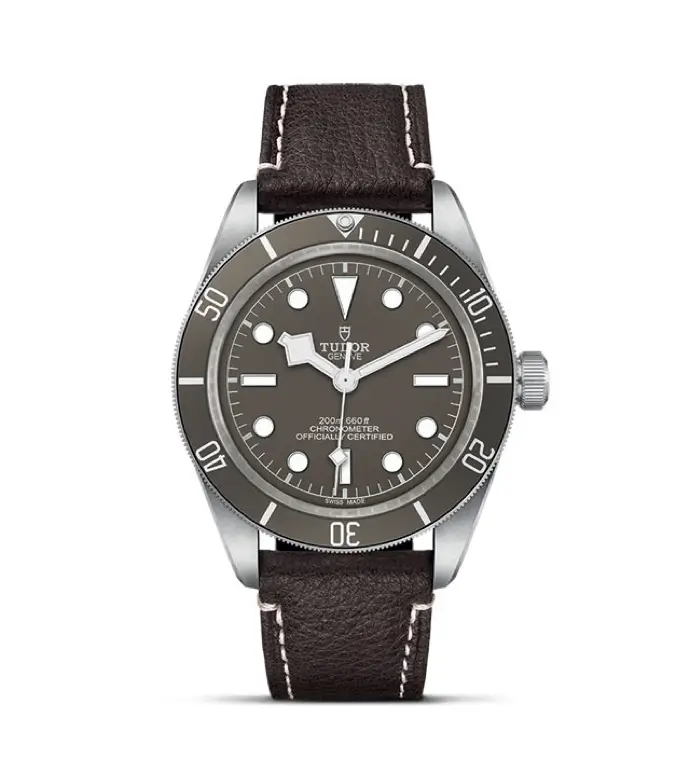
Tudor
Established in February 1926, Tudor watches bear the trademark "The Tudor" on their dials, a testament to their rich heritage.
Following World War II, Hans Wilsdorf recognized the need for the brand to flourish independently. Hence, on March 6, 1946, he founded "Montres TUDOR S.A.", specializing in timepieces for both men and women. Rolex, renowned for their technical expertise, ensured the exceptional quality, aesthetics, and functionality of Tudor watches, along with reliable distribution and comprehensive after-sales service. As proud stockists of Tudor, we offer an exciting range of their exquisite watches. Explore our collection today and discover the timeless elegance and craftsmanship of Tudor. Learn more about Tudor..
The cost of your watch
You’ve found the movement, you’ve found the brand and you’ve found the model, yet you’re still uncertain of how much you should be spending. Here is everything you need to know about the cost of your watch.
How much should I spend on a watch?
How much you spend on a watch is entirely up to you. With Ernest Jones, whichever watch you choose, you can be sure of exceptional service.
Perhaps you have a mid-range budget of between £500 to £1,500 hundred pounds? If so, why not try exploring some incredible fashion watch brands such as Tissot and Rado. With a mid-range budget, a little bit of Swiss luxury is by no means off the table. Why not explore the TAG Heuer Formula 1 line for some inspiration.
Looking at a mid to mid-high budget? We stock some supremely luxurious timepieces from prestigious brands such as Longines and Bremont.
Spread the cost
Have you found the watch of your dreams, but it’s a little out of your price range? Perhaps you have a mid-range budget, but you would like to stretch to something truly luxurious?
By utilising our finance option, you can be the proud owner of the watch that best suits you. Price doesn’t need to be a barrier, with our 0% APR finance offer, a minimum deposit of 10% is required. Got your eye on a luxury watch? You only need to put down 10% of the total cost and your brand new, luxury watch will be on its way to you.
Following your purchase, you will pay the remainder of the total cost for you watch in monthly instalments, completely interest-free. To find out more about finance, head over to our customer service area.
Continue the journey
Ready to continue the journey from watch novice to owner of a fine timepiece? Explore our purchasing options below and take the next step toward owning your new watch.
Shop watches in store
Explore the stunning range of watches in your local Ernest Jones store now. Unsure where to find you nearest store? Simply use our handy store locator. Considering a purchase but you would like a bit more information on your chosen brand? Book an appointment either online or over the phone now.
Shop watches online
Have you got your heart set on a specific watch? Perhaps you know the exact watch you want, and you are ready to make the purchase today? Explore watches online with Ernest Jones now.